Sunday, November 8, 2009

Making a Come Back

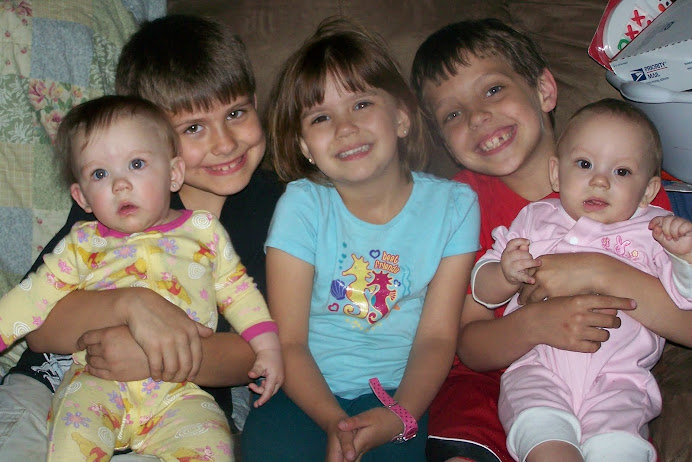
Picture taken at the Louisville Zoo
By TODD PITMAN, Associated Press Writer Todd Pitman, Associated Press Writer – Sat Nov 7, 1:31 pm ET
KOURE, Niger – A crisp African dawn is breaking overhead, and Zibo Mounkaila is on the back of a pickup truck bounding across a sparse landscape of rocky orange soil.
The tallest animals on earth are here, the guide says, somewhere amid the scant green bush on one side, and the thatched dome villages on the other.
They're here, but by all accounts, they shouldn't be.
A hundred years ago, West Africa's last giraffes numbered in the thousands and their habitat stretched from Senegal's Atlantic Ocean coast to Chad, in the heart of the continent. By the dawn of the 21st century, their world had shrunk to a tiny zone southeast of the capital, Niamey, stretching barely 150 miles (240 kilometers) long.
The numbers of the Western subspecies dwindled so low that in 1996, they numbered a mere 50.
Instead of disappearing as many feared, though, the giraffes have bounced miraculously back from the brink of extinction, swelling to more than 200 today.
It's an unlikely boon experts credit to a combination of concerned conservationists, a government keen for revenue, and a rare harmony with villagers who have accepted their presence — for now.
___
There are nine subspecies of giraffes in Africa, each distinguished by geographic location and the color, pattern and shape of their spotted coats.
The animals in Niger are known as Giraffa camelopardalis peralta, the most endangered subspecies in Africa. They have large orange-brown spots that fade into pale white legs.
Ten years ago, an estimated 140,000 giraffes inhabited Africa, according to Julian Fennessy, a Nairobi, Kenya-based conservation expert. Today, giraffes number less than 100,000, devastated by poaching, war, advancing deserts and exploding human populations that have destroyed and fragmented their habitats. Around half the giraffes live outside game parks in the wild, where they are more difficult to monitor and protect, Fennessy said.
Giraffe hunting is prohibited in many countries. And some, like Kenya, have taken giraffe meat off the menu of tourist restaurants that once served them up on huge skewers. Even so, Fennessy said the plight of giraffes has largely been overlooked in conservation circles.
"We're trying to increase awareness, educate people, help governments put conservation practices in place," said Fennessy, who founded the Giraffe Conservation Foundation to draw attention to the animals' plight. "If we don't, giraffe numbers are going to continue to drop."
___
The first time the trucks came for them in Koure was more than a decade ago, during the reign of an army colonel who seized power in a 1996 coup.
Col. Ibrahim Bare Mainassara was adamant they would make a good gift for the president of neighboring Burkina Faso and he ordered several captured, said Omer Kodjo Dovi of the Niamey-based Association to Safeguard the Giraffes of Niger.
But "the giraffes went into a panic," Dovi said. "They couldn't outrun the trucks."
The animals weigh up to 2,200 pounds (1,000 kilograms) and can run at speeds up to 35 miles per hour (55 kilometers per hour). But if they fall, they can have difficulty getting up and die.
Dovi said five were captured. Three died on the spot; two were believed shipped to Burkina Faso. Nobody knows if they ever made it.
By 1998, Niger's government — pressed by conservation groups — began to realize the herds were about to disappear forever.
Authorities drafted new laws banning hunting and poaching. Killing a giraffe became punishable by five-year jail terms and fines amounting to hundreds of times the yearly income of farmers.
The changes had a startling effect: by 2004, the herds had nearly doubled in size.
The government "realized they had an invaluable biological and tourism resource: the last population left in West Africa," said Jean-Patrick Suraud, a French scientist with the Association to Safeguard the Giraffes of Niger.
In 2004, though, the trucks came again — this time on a mission for President Mamadou Tandja, who ordered a pair captured for the dictator of neighboring Togo.
Four vehicles barreled down the two-lane highway toward the giraffe zone. Inside them were Togolese soldiers, government forestry rangers and three local guides, according to the independent local newspaper Le Republicain, which reported the incident and published photographs.
"They did it like cowboys," said Suraud, who began working in Niger in 2005. "These are big animals, fragile. They can easily die of stress."
The giraffes were tied up, blindfolded, tranquilized and hauled onto the back of open-back trucks bound for the Togo border.
They died en route.
___
In Africa, giraffe skin is used for drums, watertight bowls, even shoes. Their bones are employed as grinders and some believe they can help bring rain. Mounkaila, the guide, said some villagers believe the hair on giraffe coats can induce fertility.
The villagers living around Koure, though, think giraffes are mostly useless, Suraud said. They aren't domesticated, and they can't be hunted for food. So the Association to Safeguard the Giraffes of Niger tries to teach people it's in their interest to keep them around.
"We tell them, 'if you are pro-giraffe, we can support you, give you loans,'" Suraud said. "But there is a quid pro quo. 'We also want you to stop chopping down their bushes and plant trees.'"
With 10 staff and help from private European zoos and the Prince Albert II of Monaco Foundation, the Giraffe Association has built wells, planted trees and educated guides like Mounkaila who make a living escorting visitors through "the giraffe zone" — the fenceless region the animals trek through.
Niger's herds bring in a modest amount of tourist money for the government, too, paid in small sums through $10 fees distributed partly to the local district.
The Giraffe Association has focused especially on loans.
One of the beneficiaries, a 55-year-old Adiza Yamba, bought a small lamb for $50. The mother of eight fed it, then sold it for twice the price after it grew, paying back the money and pocketing the profit — a huge amount in one of the world's poorest countries.
"We don't mind them," Yamba said, echoing the stated view of most farmers. "Sometimes they try to eat the beans or mangos from our fields, but they never bother us."
Truer sentiments, perhaps, were evident last year when a pair of giraffes was killed by a truck as they crossed the highway: villagers swiftly moved in and divvied up huge chunks of red meat from the roadkill.
___
Since 1996, Niger's giraffe population has expanded by 12 percent per year — three times their average growth rate on the rest of the continent, Suraud said.
One reason: they face no natural predators. Poachers around Koure long ago wiped out the region's lions and leopards — which can claim 50 to 70 percent of young giraffes before they reach their first year.
The giraffes had also stumbled upon a peaceful region with enough food to sustain them, and a population that mostly left them alone. Today, they crisscross the land in harmony with turbaned nomads in worn flip-flops shepherding camels and sheep.
Drawn to freshly growing vegetation that sprouts during the rainy season, the giraffes can be seen in herds of 10 or 15, wrapping 18-inch black tongues (45-centimeter black tongues) around thorny acacia trees and combretum bush.
They graze within eyesight of farmers living in thatched dome huts, sometimes crossing through their bean and millet fields.
They are so used to humans, tourists can walk virtually right up to them.
"It's quite special in Niger how habituated they've become," Fennessy said. "You don't normally find giraffes living so close to villagers."
__
As the herds grow, some question how much the land can support.
The animals have been exploring new zones close to the border with Mali. In 2007, two crossed into Nigeria, and never returned.
"When they go away from this zone, it's a big risk, they can be hunted easily," said Suraud. "The population may be growing, but they're still very threatened."
The biggest hazard: habitat loss.
On a recent day, Salifou Mamoudou, an Environment Ministry official, spotted a turbaned man raking away vegetation from a dirt field. He told the man he was breaking the law; the man said he was only plowing a family plot — legally.
Mamoudou shrugged, and moved on.
Villagers relentlessly cut down dead wood to sell, he said. And, in an effort to make way for crops, they cut down vegetation the giraffes feed on. That's technically illegal, but there is almost no authority around to stop them.
"If we let them, they'll cut trees all the way up to the road," Mamadou said, waving a hand toward the highway, several miles (kilometers) away. "If there is no habitat, there will be no giraffes."
___
In the early morning dusk, a family of five giraffes is feeding on bubbles of vegetation freshened by recent rain.
It is a peaceful, primordial scene.
Mounkaila, the guide, takes a drag off a cigarette and walks casually toward them. He is just a few yards (meters) away, dwarfed by animals nearly three times his height.
Mounkaila rattles off some facts, not bothering to keep his voice down. The gentle creatures eye him, but don't seem to mind. A step closer, and they will slowly walk away.
They can grow up 20 feet tall (six meters tall), he says. They can eat 65 to 85 pounds (30 to 40 kilograms) per day, live an average of 25 years, and are able to go without water for weeks, needing less than camels.
Amid a clutch of treetops in the opposite direction, the heads of another pair poke out.
Mounkaila sweeps his shriveled hand across the landscape, toward a red and white cell phone tower rising not far away above the greenery.
"It wasn't always like this," the 50-year-old says, digging his flip flops into the orange soil. "When I was a boy, the giraffes were far more numerous, but they were harder to see."
There used to be enough vegetation to conceal them, he said, but the bush and forests are disappearing. And with nowhere to hide, the animals are forced to come out in search of food.
"They're easier to spot," Mounkaila said. "But that's good for us, not them."

Healthcare Bill Has Passed

By DAVID ESPO, AP Special Correspondent David Espo, Ap Special Correspondent – 8 mins ago
WASHINGTON – In a victory for President Barack Obama, the Democratic-controlled House narrowly passed landmark health care legislation Saturday night to expand coverage to tens of millions who lack it and place tough new restrictions on the insurance industry. Republican opposition was nearly unanimous.
The 220-215 vote cleared the way for the Senate to begin debate on the issue that has come to overshadow all others in Congress.
A triumphant Speaker Nancy Pelosi likened the legislation to the passage of Social Security in 1935 and Medicare 30 years later.
"It provides coverage for 96 percent of Americans. It offers everyone, regardless of health or income, the peace of mind that comes from knowing they will have access to affordable health care when they need it," said Rep. John Dingell, the 83-year-old Michigan lawmaker who has introduced national health insurance in every Congress since succeeding his father in 1955.
In the run-up to a final vote, conservatives from the two political parties joined forces to impose tough new restrictions on abortion coverage in insurance policies to be sold to many individuals and small groups. They prevailed on a roll call of 240-194.
Ironically, that only solidified support for the legislation, clearing the way for conservative Democrats to vote for it.
The legislation would require most Americans to carry insurance and provide federal subsidies to those who otherwise could not afford it. Large companies would have to offer coverage to their employees. Both consumers and companies would be slapped with penalties if they defied the government's mandates.
Insurance industry practices such as denying coverage on the basis of pre-existing medical conditions would be banned, and insurers would no longer be able to charge higher premiums on the basis of gender or medical history. In a further slap, the industry would lose its exemption from federal antitrust restrictions on price gouging, bid rigging and market allocation.
A cheer went up from the Democratic side of the House when the bill gained 218 votes, a majority. Moments later, Democrats counted down the final seconds of the voting period in unison, and and let loose an even louder roar when Pelosi grabbed the gavel and declared, "the bill is passed.'
From the Senate, Majority Leader Harry Reid of Nevada issued a statement saying, "We realize the strong will for reform that exists, and we are energized that we stand closer than ever to reforming our broken health insurance system."
The bill drew the votes of 219 Democrats and Rep. Joseph Cao, a first-term Republican who holds an overwhelmingly Democratic seat in New Orleans. Opposed were 176 Republicans and 39 Democrats.
Nearly unanimous in their opposition, minority Republicans cataloged their objections across hours of debate on the 1,990-page, $1.2 trillion legislation.
United in opposition, minority Republicans cataloged their objections across hours of debate on the 1,990-page, $1.2 trillion legislation.
"We are going to have a complete government takeover of our health care system faster than you can say, `this is making me sick,'" jabbed Rep. Candice Miller, R-Mich., adding that Democrats were intent on passing "a jobs-killing, tax-hiking, deficit-exploding" bill.
But with little doubt about the outcome, the rhetoric lacked the fire of last summer's town hall meetings, when some critics accused Democrats of plotting "death panels" to hasten the demise of senior citizens.
The legislation would require most Americans to carry insurance and provide federal subsidies to those who otherwise could not afford it. Large companies would have to offer coverage to their employees. Both consumers and companies would be slapped with penalties if they defied the government's mandates.
Insurance industry practices such as denying coverage on the basis of pre-existing medical conditions would be banned, and insurers would no longer be able to charge higher premiums on the basis of gender or medical history. In a further slap, the industry would lose its exemption from federal antitrust restrictions on price gouging, bid rigging and market allocation.
At its core, the measure would create a federally regulated marketplace where consumers could shop for coverage. In the bill's most controversial provision, the government would sell insurance, although the Congressional Budget Office forecasts that premiums for it would be more expensive than for policies sold by private firms.
The bill is projected to expand coverage to 36 million uninsured, resulting in 96 percent of the nation's eligible population having insurance.
To pay for the expansion of coverage, the bill cuts Medicare's projected spending by more than $400 billion over a decade. It also imposes a tax surcharge of 5.4 percent on income over $500,000 in the case of individuals and $1 million for families.
The bill was estimated to reduce federal deficits by about $104 billion over a decade, although it lacked two of the key cost-cutting provisions under consideration in the Senate, and its longer-term impact on government red ink was far from clear.
Democrats lined up a range of outside groups behind their legislation, none more important than the AARP, whose support promises political cover against the cuts to Medicare in next year's congressional elections.
The nation's drug companies generally support health care overhaul. And while the powerful insurance industry opposed the legislation, it did so quietly, and the result was that Republicans could not count on the type of advertising campaign that might have peeled away skittish Democrats in swing districts.
Over all, the bill envisioned the most sweeping set of changes to the health care system in more than a generation, and Democrats said it marked the culmination of a campaign that Harry Truman began when he sat in the White House 60 years ago.
Debate on the House floor had already begun when Obama strode into a closed-door meeting of the Democratic rank and file across the street from the Capitol to make a final personal appeal to them to pass his top domestic priority.
Later, in an appearance at the White House, he said he had told lawmakers, "to rise to this moment. Answer the call of history, and vote yes for health insurance reform for America."
Participants also said Obama had referred to this week's shooting rampage at Fort Hood, Texas, in which 13 people were killed. His remarks put in perspective that the hardships soldiers endure for the country are "what sacrifice really is," as opposed to "casting a vote that might lose an election for you," said Rep. Robert Andrews, D-N.J.
It appeared that a compromise brokered Friday night on the volatile issue of abortion had finally secured the votes needed to pass the legislation.
As drafted, the measure denied the use of federal subsidies to purchase abortion coverage in policies sold by private insurers in the new insurance exchange, except in cases of incest, rape or when the life of the mother was in danger.
But abortion foes won far stronger restrictions that would rule out abortion coverage except in those three categories in any government-sold plan. It would also ban abortion coverage in any private plan purchased by consumers receiving federal subsidies.
Disappointed Democratic abortion rights supporters grumbled about the turn of events, but pulled back quickly from any thought of opposing the health care bill in protest.
One, Rep. Jan Schakowsky, D-Ill., detailed numerous other benefits for women in the bill, including free medical preventive services and better prescription drug coverage under Medicare. "Women need health care reform," she concluded in remarks on the House floor.
A Republican alternative was rejected on a near party line vote of 258-176.
It relied heavily on loosening regulations on private insurers to reduce costs for those who currently have insurance, in some cases by as much as 10 percent. But congressional budget analysts said the plan would make no dent in the ranks of the uninsured, an assessment that highlighted the difference in priorities between the two political parties.
It was a theme of Obama's remarks to Democrats at midmorning.
The president said Democrats have a 70-year history of creating and defending programs like Social Security and Medicare, Andrews said afterward, adding Obama had said the day's vote "is going to define the difference between the Republican and Democratic parties for decades."
_____
Associated Press writers Phil Elliott, Alan Fram and Erica Werner contributed to this report.

Thursday, October 29, 2009

Stupid Laws from Canada

It is illegal for a man to drink with a woman in an Edmonton beer parlor in (Alberta.)

It is unlawful to throw snowballs or set off firecrackers within the city, without the authorization of the mayor or City Council. (Calgary)

All bicycle riders must signal with the arm before making a turn, and a bicycle rider must keep both hands on the handlebars at all times" ( Edmonton.)

In Canada, It is illegal for a teen to walk down main street with their shoes untied. (Fort Qu'Appelle)

It is illegal to try and catch fish with your hands (Saskatoon.)

You are not allowed to saw wood on the streets, or wash your automobile in (Toronto.)

Theater owners are forbidden to start a movie that will end after 2 am. (Toronto.)

You are not allowed to play a musical instrument in a park in (Windsor, Ontario)

A by-law forbids anyone from striking the sidewalk with a metal object (Winnipeg)

It is against the law to go naked in your own home if you leave the blinds up. (Winnipeg)

Stupid Laws from Wyoming

If one is drunk in a mine, he or she could land in jail for up to a year.

Junk dealers may not make any business transactions with drunk persons.

It is illegal to wear a hat that obstructs people's view in a public theater or place of amusement.

Using a firearm to fish is strictly forbidden.

Any person who fails to close a fence is subject to a fine of up to seven hundred and fifty dollars.

You may not take a picture of a rabbit from January to April without an official permit.

Skiing under the influence of alcohol is prohibited.

All new buildings that cost over $100,000 to build must have %1 of funds spent on art work for the building.

Citizens may not take showers on Wednesdays. (Cheyenne)

Stupid Laws from Wisconsin

One may not camp in a wagon on any public highway or risk a fine of up to ten dollars.

It is a class A misdemeanor to wave a burning torch around in the air.

Livestock have the right-of-way on public roads.

The government may not prohibit manual flushed urinals.

Margarine may not be substituted for butter in restaurants unless it is requested by the customer.

Butter substitutes are not allowed to be served in state prisons.

Whenever two trains meet at an intersection of said tracks, neither shall proceed until the other has.

Condoms were considered an obscene article and had to hidden behind the pharmacist's counter.
At one time, margarine was illegal.

State Law made it illegal to serve apple pie in public restaurants without cheese.

The state definition of rape stated that it was a man having sex with a woman he knows not to
be his wife. That would mean that women could not be guilty of rape and neither could men who thought they were married to the woman.

While all cheese making requires a license, Limburger cheese making requires a master cheese maker's license.

It is illegal to kiss on a train.

It is illegal to cut a woman's hair.

You are allowed to marry your house.

After 3:00 a.m., you have to send a rocket signal in the air after every mile you drive. Then wait a minute for a response. (Repealed)

Tattooing is illegal unless it is done for medical purposes. (Brookfield)

It is unlawful for one to allow another to use the first person's telephone in order to make prank phone calls. (Brookfield)

Screens are required on all windows from May 1 to October 1. (Hudson)

You are not allowed to put litter into someone else's trash receptacle without express permission. (Hudson)

No one may sit on another's parked vehicle without expressed consent of the owner. (Hudson)

No male is allowed to be in a state of arousal in public. (Kenosha)

It is illegal to tie up your horse along Third Street (Now a major bar strip) . (La Crosse)

It is illegal to display an unclothed mannequin in a store window. (La Crosse)

It is illegal to play checkers in public. (La Crosse)

You cannot "worry a squirrel." (La Crosse)

An old ordinance forbids parking for over two hours unless a horse is tied to the car.(Milwaukee )

It is against the law to play a flute and drums on the streets to attract attention. (Milwaukee )

If one is thought of as offensive looking, it is illegal for him to be in public during the day. (Milwaukee )

It is illegal to purchase or use Sparklers in the city, yet you can buy fully disassembled automatic
machine guns. (Milwaukee)

It is illegal to wake a fireman when he is asleep. (Racine)

Women may not walk down a public street at night without being accompanied by a man. (Racine)

Women are not allowed to wear anything red in public. (St. Croix)

Nuclear weapons may not be manufactured in the city limits. (Sun Prairie)

Persons may not ride a bicycle with their hands off the handlebars. (Sun Prairie)

Cats are forbidden from entering cemeteries. (Sun Prairie)

Even if one gets his/her change "stolen" by a vending machine, hitting the machine violates a city ordinance. (Sun Prairie)

Unremoved snow on one's property is considered a public nuisance. (Sun Prairie)

Spitting on the sidewalk is prohibited. (Wauwatosa)

If a person shall fail to return books he/she has checked out from the library, that person should return their library card to the library until the books are returned. (Wauwatosa)

Swimming in water fountains is prohibited. (Wauwatosa)

Stupid Laws from West Virginia

No children may attend school with their breath smelling of "wild onions."

Unmarried couple who live together and "lewdly associate" with one another may face up to a year in prison.

When a railroad passes within 1 mile of a community of 100 or more people in it, they must builda station and stop there regularly to pick up and drop off passengers.

Any person who commits adultery shall be fined at least twenty dollars.

A tax of 1 cent is levied for every 16 and 9 ounces of coke sold in a store.

A person may be placed in jail for up to six months for making fun of someone who does not accept a challenge.

It is illegal to snooze on a train.

A person may not hold public office if he or she has ever participated in a duel.

For each act of public swearing a person shall be fined one dollar.

According to the state constitution, it is unlawful for anyone to own a red or a black flag.

If you wear a hat inside a theater, you may be fined.

Road-kill may be taken home for supper.

Firemen may not whistle or flirt at any woman passing a firehouse. (Huntington)

It is legal to beat your wife so long as it is done in public on Sunday, on the courthouse steps. (Huntington)

No member of the clergy is allowed to tell jokes or humorous stories from the pulpit during a church service (Nicholas County)

Stupid Laws from Washington

All lollipops are banned.

A law to reduce crime states: "It is mandatory for a motorist with criminal intentions to stop at the city limits and telephone the chief of police as he is entering the town."

It is illegal to paint polka dots on the American flag.

People may not buy a mattress on Sunday.

All motor vehicles must be preceded by a man carrying a red flag (daytime) or a red lantern (nighttime) fifty feet in front of said vehicle.

It is illegal to pretend that one's parents are rich.

You are not allowed to breastfeed in public. (Repealed)

One may not spit on a bus.

When two trains come to a crossing, neither shall go until the other has passed.

You cannot buy meat of any kind on Sunday.

It is illegal to attach a vending machine to a utility pole without prior consent from the utility company. Furthermore, if permission is granted, the vending machine may not be less than twelve feet from the ground.

No person may walk about in public if he or she has the common cold

Destroying a beer cask or bottle of another is illegal.

It is illegal to entice girls away from the Maple Lane School for girls.

X-rays may not be used to fit shoes.

Men who deflower virgins, regardless of age or marital status, may face up to five years in jail. (Auburn)

You may not shuck peanuts on the street. (Bremerton)

Dancing and drinking may not occur at the same establishment. (Lynden)

You may not carry a concealed weapon that is over six feet in length. (Seattle)

Women who sit on men's laps on buses or trains without placing a pillow between them face an automatic six-month jail term. (Seattle)

No one may set fire to another person's property without prior permission. (Seattle)

TV's may not be bought on Sundays. (Spokane)

Strippers may not come closer than four feet to any customer. (Spokane County)

No structure shall contain more than two toilets that use potable water for flushing. -San Juan County Ordinance NO. 7 -1995 (Passed June 7,1995) (Waldron Island)

You may not ride an ugly horse (Wilbur)